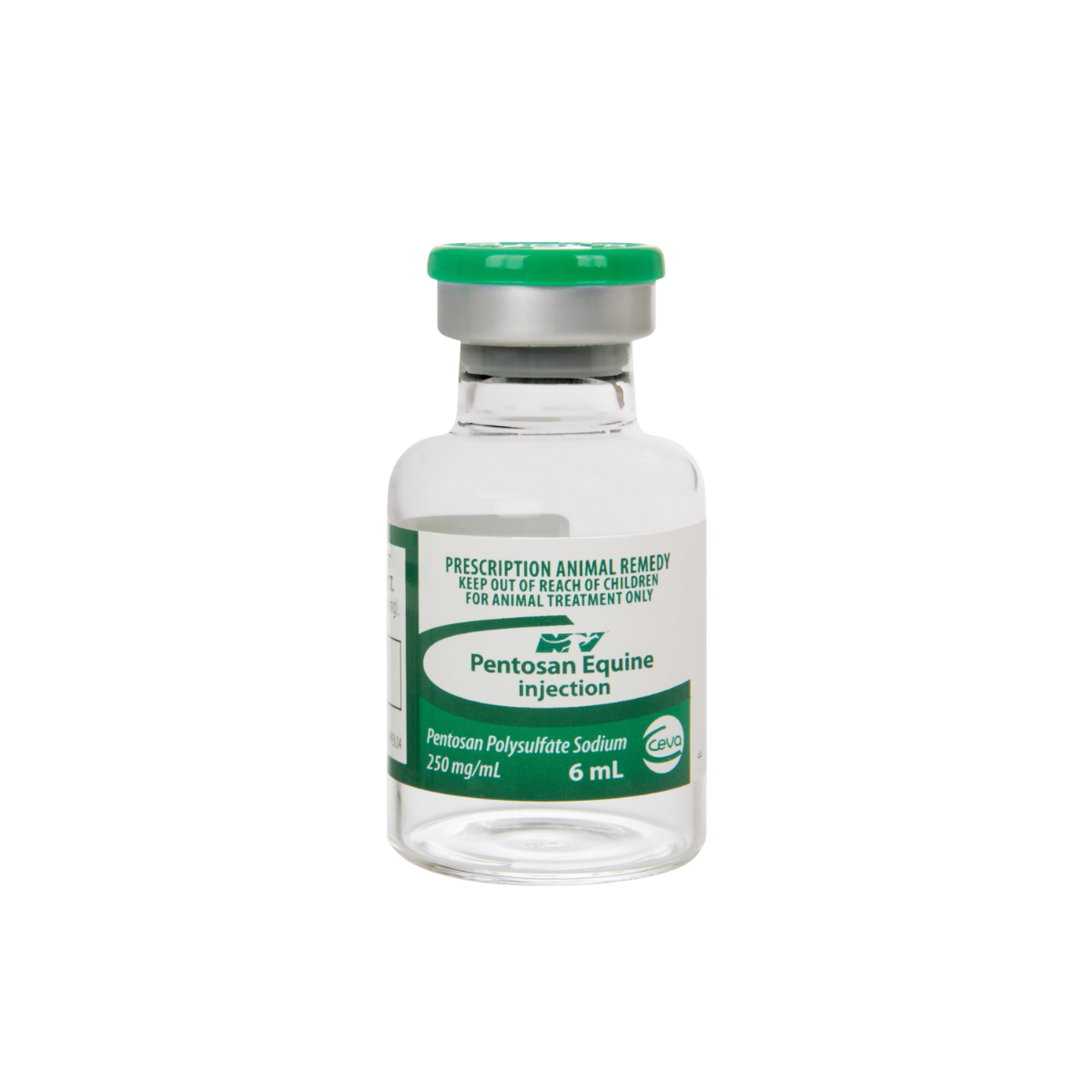
Pentosan Equine Injection is a vet-only, disease-modifying joint treatment containing 250 mg/mL of pentosan polysulfate sodium, used to aid non-infectious, inflammatory joint disease — including osteoarthritis — in horses and camels. Manufactured by Ceva, each 6 mL sterile glass vial provides a single intramuscular dose for a 500 kg horse or a large camel. Unlike products that simply mask pain, pentosan polysulfate acts at the source of joint degeneration to stimulate cartilage repair, improve joint-fluid quality and reduce inflammation, making it a cornerstone treatment for working, performance and ageing animals.
How Pentosan Equine Injection supports cartilage and joint health?
Pentosan Equine Injection actively works to reverse existing joint damage and protect against further degradation through five direct actions:
- Improves cartilage quality — stimulates chondrocytes to produce more proteoglycans that build and repair the cartilage matrix.
- Improves joint-fluid quality — prompts synovial cells to produce high-molecular-weight hyaluronic acid for better lubrication and shock absorption.
- Inhibits destructive enzymes that break down cartilage.
- Provides anti-inflammatory activity within the joint.
- Increases blood supply to joints and helps break down clots in subchondral bone, removing one source of joint pain.
What is the active ingredient in Pentosan Equine Injection?
Each millilitre contains 250 mg of pentosan polysulfate sodium, a beechwood-derived semi-synthetic polysulfated polysaccharide with chondroprotective and anti-inflammatory properties. You can review the manufacturer’s full composition and indications on the official Ceva Pentosan Equine product page.
What is Pentosan Equine Injection used for?
Pentosan Equine Injection is indicated as an aid in the treatment of non-infectious, inflammatory joint disease in horses and camels. It is most commonly used for:
- Osteoarthritis — particularly where multiple joints are involved.
- Osteochondrosis dissecans (OCD).
- Traumatic joint and peri-articular inflammation.
- Helping to prevent joint disease caused by cyclical or repetitive trauma, such as the repeated concussion seen in racehorses and racing camels.
How is Pentosan Equine Injection given to horses and camels?
It is administered by intramuscular (IM) injection and should always be used according to the product label and the direction of your veterinarian. The manufacturer’s dosage guidance is:
- Horses: 3 mg/kg pentosan polysulfate sodium — equivalent to 6 mL (one vial) for a 500 kg horse — given every 5–7 days for a course of 4 injections.
- Camels: 6 mL (one vial) for a large camel, or 3 mL (half a vial) for a small camel, given every 5–7 days for 4 injections.
- Maintenance: veterinarians commonly recommend a monthly booster injection after the initial 4-week course, with the full course repeated annually.
Where directed by a veterinarian, the product may also be given by intra-articular injection using aseptic technique (250 mg, equal to 1 mL or one-sixth of a vial, per joint once weekly for up to 4 doses). Because pentosan polysulfate has an affinity for cartilage and works best when the tissue is exposed to the drug over time, completing the full course matters. Store below 25 °C, protect from light and do not freeze. The meat withholding period in horses is 28 days.
Is Pentosan Equine Injection safe for performance and racing animals?
The product is widely used in equine and camel athletes. According to the manufacturer, it should not be used in animals with clotting defects, traumatic haemorrhage, active infection, or renal or hepatic failure, or within 48 hours of surgery. Caution is advised when other anticoagulant or anti-inflammatory (NSAID) medicines are used concurrently. For racing and competition animals, the medication rules of the relevant racing or endurance authority must be observed — confirm current withdrawal times with your veterinarian and the governing body before competition.
For other joint-support options stocked at Ghezlan, see Pentosan Evolution Injection, Halo Injection sodium hyaluronate and our full camels and horses category page.
How many injections are in a full course?
The standard course is 4 injections given every 5–7 days, usually followed by a monthly booster and repeated annually, or as directed by your veterinarian.
Can this product be used in camels?
Yes. Ceva’s indications include camels: a large camel typically receives 6 mL (one vial) and a small camel 3 mL (half a vial) per injection. Always confirm dosing with your veterinarian.
Does it just relieve pain?
No. Rather than only masking pain, Pentosan Equine Injection is a disease-modifying treatment that stimulates cartilage repair, improves joint-fluid quality and reduces inflammation at the source of joint disease.



 Free and Fast Delivery
Nabeel Almasoodi –
I’ll definitely be ordering from here again. Delivery was spot on and the items are 100% genuine.
Tiffany Alec –
Had a small question and they replied within minutes. It’s great to deal with such a professional team!
سيف المرر –
بصراحة، أفضل خدمة مررت بها منذ فترة. وصل طلبي في وقت قياسي وكان مغلفاً بشكل مثالي
حمدان العويسي –
عملية سلسة حقاً. الموقع سهل التصفح للغاية ولم أواجه أي مشاكل في الدفع
Mahmoud Morsi –
Found exactly what I needed at a much better price than other sites. Very happy with the quality.